

When Wrongfully Convicted - Make Change
In this episode, you'll meet Jeff Deskovic, a quiet kid who didn't quite fit in. At the age of 16, this put him on law enforcement's radar after a classmate was murdered. Coerced by the police who brought him in and told him they needed his help to solve the crime, this boy who dreamed of being a cop when he grew up, was eager to help.And vulerable. In a meeting that turned into an intense interrogation, he was forced into a false confession. Only then did he realize he was being arrested with no legal representation. His story of serving 16 years for a murder he did not commit, then re-entering society and achieving amazing accomplishments, is one you don't want to miss.
Parenting Parents
Family law attorney Garry Gekht discusses the emotional side of his obligation to his client and the number one unspoken law -- the best decision is the one that's in the best interest of the children. He calls children "vessels of information" and believes, while it's unfortunate, it cannot be avoided that they are part of the process. However, it's important that the child is not traumatized by the procedures. He believes it takes very strong parents to put their children's emotional well-being first. This is a big hurdle in such an emotional environment.
No Room Left for Denial
Join me in my conversation with Shelly Edwards Jorgensen who shares her courageous journey through her mothers death at the hands of her father. Left in the dark at the age of 15 on so many issues, she describes walking into the courtroom and being blindsided. She was expected to testify against her father who was sitting in front of her, then having no protection or support from the legal system while staying in the same home with him after her day in court. Her bravery as a teenager is moving. Her path of success moving forward is a story you will want to hear.
You Are Powerless in the Court System
In part two of my conversation with Jan Canty, she talks about the hard truths she learned while trying to heal from the murder of her husband. She describes discovering a modality called the Biopsychosocial Model which teaches you to focus on the biological, psychological, and socio-environmental factors in your life. Her story of transformation -- from becoming a triathlete to a psychologist -- is truly moving.
We're Not Wanted in the Courtroom
Join me in a two-part series of a very intimate conversation with Jan Canty, whose story of courage and transformation is miraculous. Jan discusses the trauma of her husband's sudden murder. The author of two books, Life Divided and What Now? Navigating the Aftermath of Homicide and Suicide, Jan's road to recovery is filled with a wealth of information for anyone who finds themself in this horrific position. She also does an amazing job of articulating the steps required to handle such a difficult situation.
Kristin Walker: Shame is Not Always Yours
Join me as I talk to Kristin Walker who tells her story of being a 12 year old on the witness stand testifying against her father who abused her without any preparation. She also talks about the time she had to testify for a friend going through an intense childhood custody case brought flashbacks to being a 12 year old and bringing up old wounds of shame and reliving trauma.
Ron Beaton: Jurors Tell the People in Power the Truth
Jury Consultant Ron Beaton discusses with Juliet that helping clients pick a jury is looking for qualities of leadership vs. followers, those who speak their mind but do they have the courage or confidence to speak up. Ron also gives some advice on some techniques jurors can use prepping for the witness stand.
Elizabeth Kelley: Humanizing Mentally Ill Defendants
Join me as I talk to criminal defense lawyer Elizabeth Kelley, whose practice focuses on people with mental disabilities. She discusses how she firmly believes that individuals with mental disabilities should have rehabilitation instead of punishment. Parameters for people with mental illness are so restrictive that they set a very low standard for helping them get a fair trial. We also discuss the benefit of bringing in expert witnesses to explain the science behind different mental and physical challenges, thereby humanizing the defendant.
Persuasion Strategist
Join me as the tables are turned, and I am a guest on the Ripple Effect of Murder. I interviewed Jan Canty in episodes 35 and 36 of TTT, discussing what it was like to be a homicide victim survivor. Now, on Jan's podcast, we discuss how homicide survivors may be used in a homicide trial and the emotional stress they come under. We talk about the delicate balance of keeping emotions in check without appearing stoic or removed which may result in looking indifferent.
Rodney Stotts: Birds Became More Important Than Drugs
You don't want to miss this episode with Master Falconer Rodney Stotts who shares how his love of animals and nature have helped him heal from a life of drugs, guns and crime. After spending time in jail, he describes the peace and tranquility he feels working with raptors, and how sitting silent in nature brings one to a place of healing. One of his many inspiring quotes,"You can only heal if you find what makes you feel better, and don't let anyone steal away your joy."
Heather Poole: We Should Not Be So Quick to Judge
In a heartfelt conversation with Immigration Attorney Heather Poole, we discuss the need for a balance of more positive immigration stories of immigrants like the founder of Yahoo, Noble Peace Prize winners, scientists, and scholars that bring over 10 billion dollars to the U.S. economy. Heather also shares amazing stories of resilience and how getting a U.S. green card transforms lives.
Gail Shifman: Trump Indictment vs. Street Criminal
Join me with "white collar" trial attorney Gail Shifman as she explains the differences and similarities of street criminals vs. white collar criminals and how the process unfolds in the legal system, especially when it is a former President of the US United States. In this unprecedented indictment, Gail discusses how the system can work in the favor of someone of such high profile yet how once arrested, the status of the convict is now exactly the same and he is referred to as a "criminal".
Fritzi Horstman: Compassion Prison Project
In today's episode with Fritzi Horstman, founder of the Compassion Prison Project, we discuss the moral injuries that those of us involved in the legal system face, including making us lose empathy and compassion. She asks listeners to keep in mind that we are humans who have hurt each other, and we must see through fear and anger to find compassion. She asks us to look at the fact that most prisoners only know violence as a solution in their lives, and that 90% of those incarcerated have incurred some type of childhood violence or trauma.
Jason Van Tatenhove: Testifying Against The Oath Keepers: The Right Thing To Do
In part 2 of my continued conversation with Jason Van Tatenhove, he describes, in vivid detail, how visiting the Holocaust Museum in Washington DC gave him the strength and courage to testify against the Oath Keepers. He describes his relief for having a law firm who believed in him enough to accept him as part of their pro-bono program since he had no resources to defend himself. He also gives a step-by-step account of what it was like be an average person one day, then surrounded by armed guards and 100s of photographers within 24 hours. He got through it by staying focused on how he could make something better for his daughters in the world they are going to inherit.
Jason Van Tatenhove: Why did a former Oath Keeper testify before Congress?
Welcome to part one of a two-part series, an explosive story about realizing you are in the wrong place at the right time. My guest, Jason Van Tatenhove, talks with me about working for the Oath Keepers and the moment he realized he was "drinking the Kool Aid". Sharing how he reinvented himself after leaving the organization, he went on to teach his kids that it’s ok to "mess up, but then work on making it right." He then leads us into what it was like to testify in front of the Jan 6th Congressional Committee.
John O'Malley: The Intersection of Mental Health and the Law
Litigator for 30+ years and now retired, John O'Malley speaks on behalf of NAMI - National Alliance on Mental Illness. He talks about trying to lift the stigma of discussing mental illness openly. John is proud of the programs NAMI offers, one of which is working to train law enforcement on identifying the signs of someone with mental illness. Juliet and John also discuss how gaining life experience helps one become better at witness prep and the importance of having empathy for those who need to take the stand.
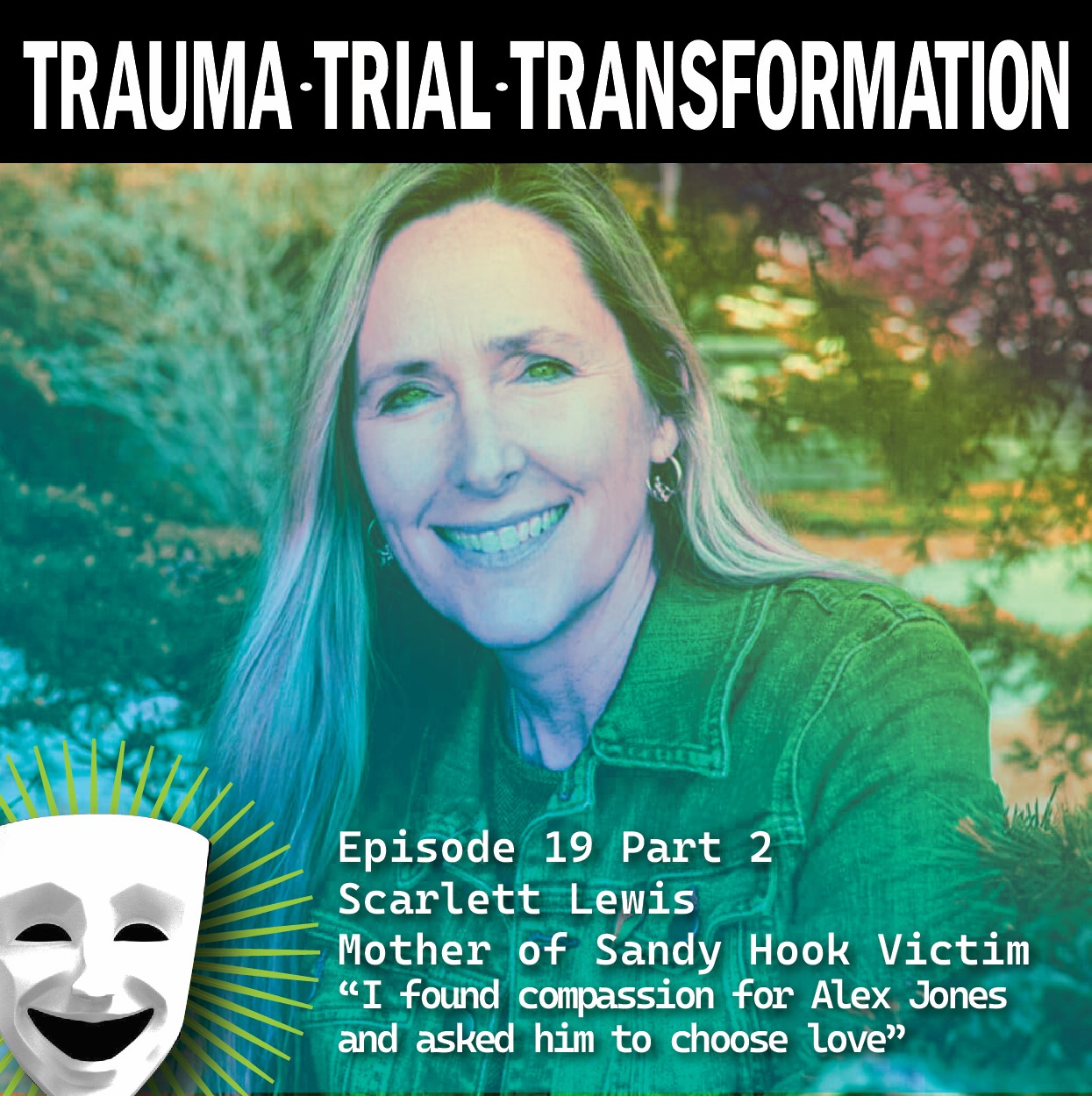
Scarlett Lewis: Choose Love
Welcome to episode #2 of the Trauma, Trial and Transformation podcast during which host Juliet Huck speaks with Scarlett Lewis the mother Jesse Lewis, one of the children killed during the Sandy Hook School shooting. Scarlett was the first of a group of parents who sued conspiracy podcast theorist Alex Jones who publicly claimed that Sandy Hook was a hoax. In this episode you will hear Juliet talk to Scarlett talk about her much publicized courtroom confrontation with Jones during the trial which eventually resulted in the jury awarding mulitple families nearly a half billion dollars.
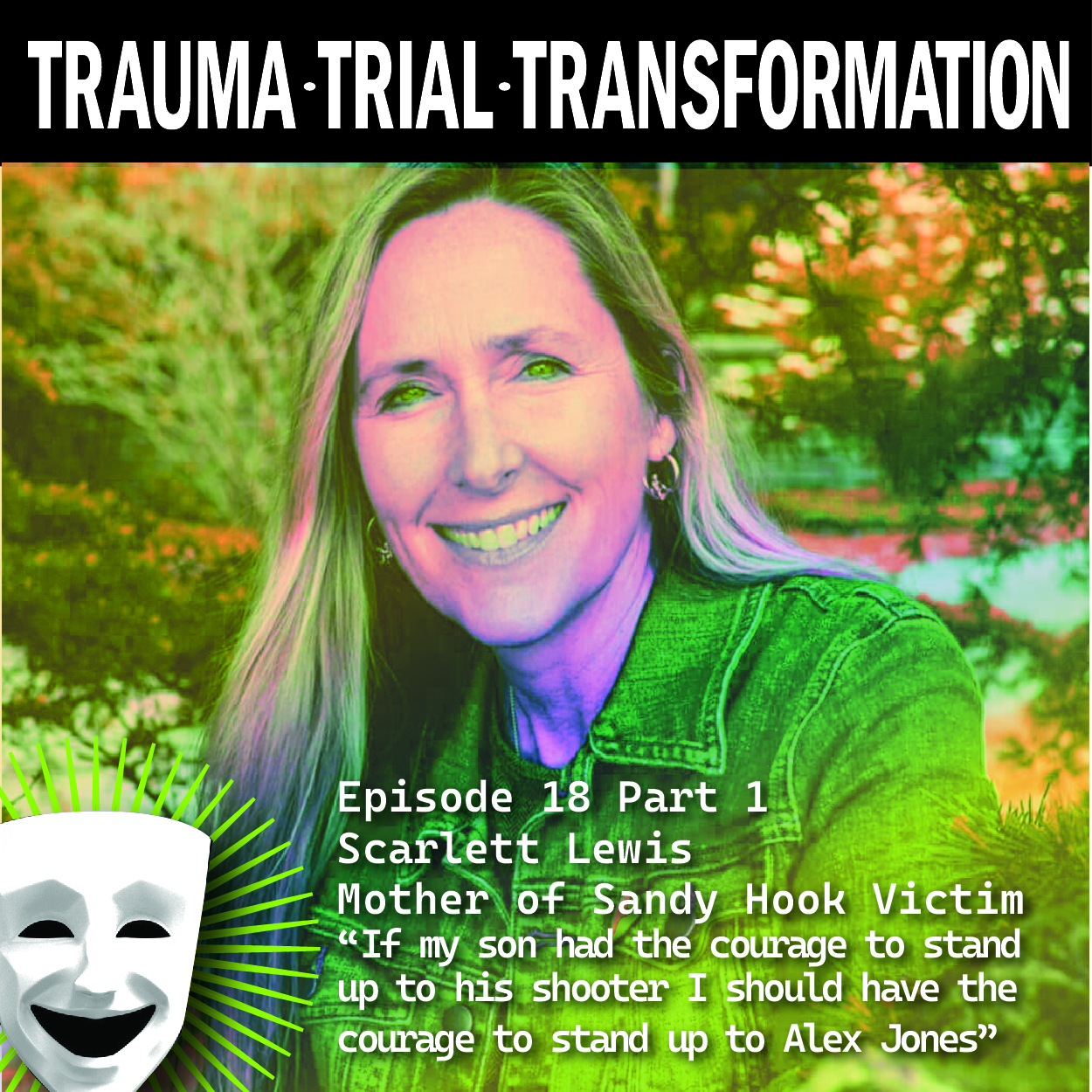
Scarlett Lewis: Courage from My Son
Please join me in an extremely powerful and moving conversation with the mother of Sandy Hook murdered victim Jessie Lewis. Scarlett Lewis is the Chief Movement Officer of the Jessie Lewis Choose Love Movement. In part one we discuss her book and how she gained strength over the years dealing with her grief - which then leads us into our conversation of having the courage to sue Alex Jones, conspiracy theorist.
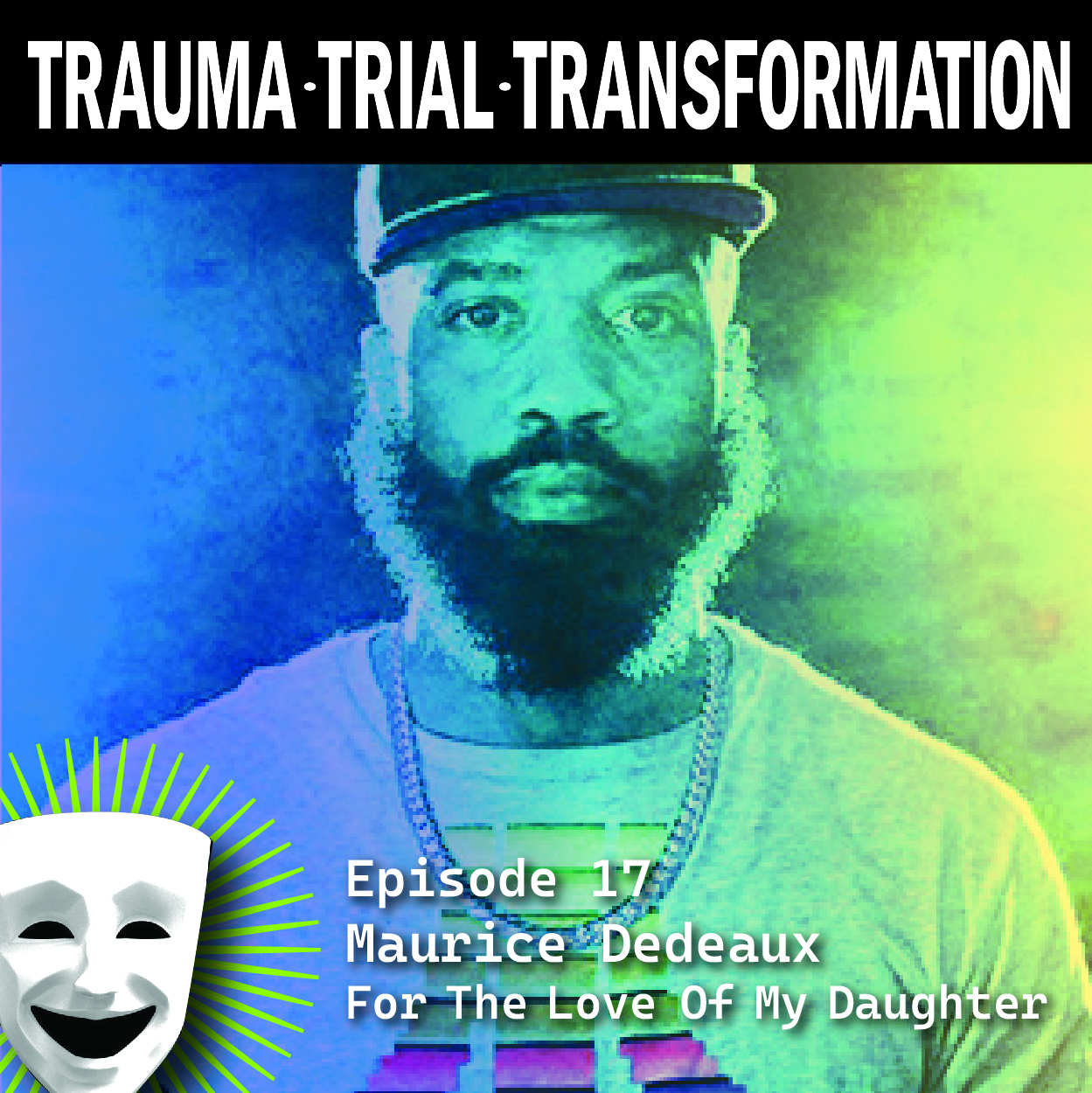
Maurice DeDeaux: For The Love of My Daughter
Today’s guest, Maurice DeDeaux, discusses the steps he took on what he labeled “YouTube University” to learn the legal system so he could represent himself in fighting for custody of his daughter. He talks about learning patience and getting past the frustration that is part of the judicial system. But he would not have it any other way as he continues his quest for custody.
Juliet Huck: Lights, Camera Action
Join me for a short commentary on how cameras in the courtroom are a double edge sword for witnesses, especially when they’re faced with reliving trauma in their lives. In those cases, cameras are the difference between the real time testimony and the media's interpretation of court's proceedings.